Saul’s Anger Toward Jonathan: A Major Breakdown in Family and Royal Relationships


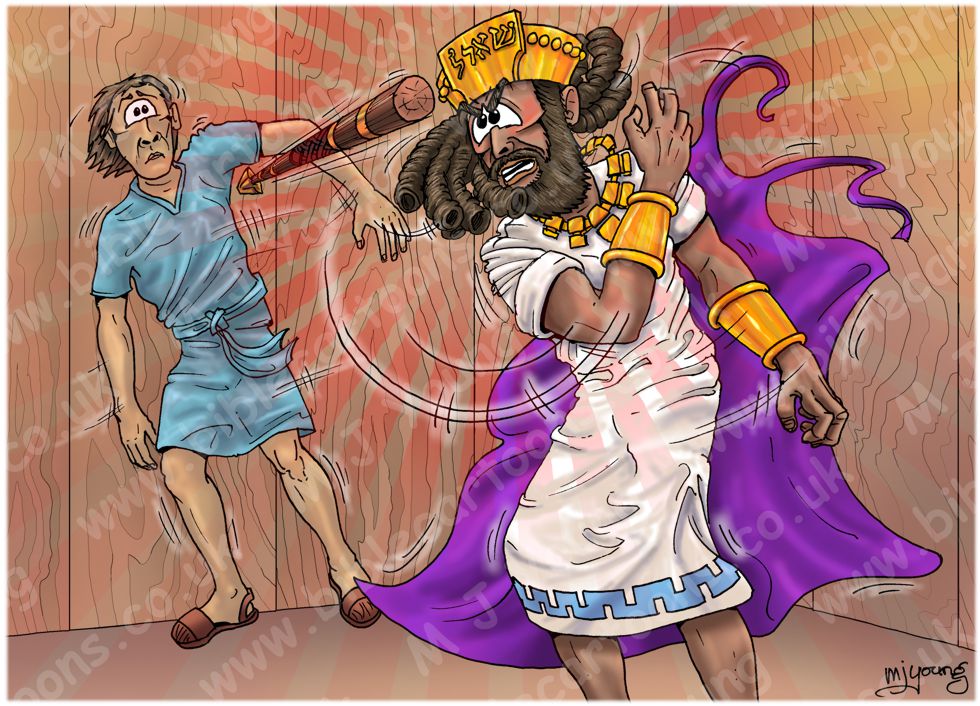
The moment when King Saul angrily lashes out at his son Jonathan in 1 Samuel 20:30–33 represents one of the most dramatic relational collapses in the Old Testament. What begins as tension over David eventually escalates into a violent confrontation between father and son. Saul’s anger not only damages his family relationship with Jonathan but also destabilizes the royal structure of Israel’s monarchy.
This incident highlights deeper issues of jealousy, fear of losing power, broken trust, and moral conflict. Saul’s rage toward Jonathan marks a turning point where both family unity and royal authority begin to unravel.
The Background: Saul, Jonathan, and David
To understand why Saul’s anger is so significant, it is important to look at the relationships involved.
-
Saul was Israel’s first king, chosen by God but later rejected because of disobedience.
-
Jonathan, Saul’s son, was the rightful heir to the throne.
-
David was the young hero who defeated Goliath and quickly gained popularity among the people.
Jonathan and David developed a deep friendship, even forming a covenant of loyalty (1 Samuel 18:1–4). However, Saul grew increasingly jealous of David’s success, especially after hearing the famous song:
-
“Saul has slain his thousands, and David his tens of thousands.”
Saul began to view David as a threat to his throne. This jealousy eventually led him to seek David’s death.
Saul’s Violent Outburst Against Jonathan
The conflict reaches its peak during a royal feast described in 1 Samuel 20. David purposely stays away from the king’s table because he fears Saul intends to kill him. When Saul asks about David’s absence, Jonathan defends his friend.
Saul reacts with explosive anger.
Saul’s Response Includes:
-
Public humiliation of Jonathan
-
Accusations of betrayal
-
Insults toward Jonathan and his mother
-
An attempt to kill his own son with a spear
This moment reveals how far Saul’s jealousy and paranoia have progressed. Instead of listening to Jonathan’s reasoning, Saul interprets his son’s loyalty to David as treason.
1. A Breakdown in Father–Son Trust
One of the most tragic aspects of this event is the collapse of trust between Saul and Jonathan.
Normally in ancient Israel:
-
Sons were expected to honor and obey their fathers.
-
Royal heirs were expected to support the king’s authority.
Jonathan, however, faced a moral dilemma. He knew that David was innocent and that God had chosen David for a special purpose.
Jonathan’s decision to defend David showed:
-
Moral courage
-
Commitment to justice
-
Loyalty to God’s will
Saul interpreted this loyalty as rebellion. When he hurled a spear at Jonathan, it symbolized the destruction of the father–son relationship.
2. A Crisis in the Royal Succession
Saul’s anger also created a political crisis for Israel.
Jonathan was the crown prince, meaning he should have supported his father’s plan to eliminate David. From Saul’s perspective, David threatened Jonathan’s future as king.
Saul even says to Jonathan:
“As long as the son of Jesse lives on the earth, neither you nor your kingdom will be established.” (1 Samuel 20:31)
Saul believed that protecting David meant surrendering the throne.
Yet Jonathan responded differently.
Jonathan’s remarkable attitude included:
-
Accepting that David might become king
-
Remaining loyal to God’s plan
-
Refusing to support injustice
This created a divide within the royal household itself.
3. Saul’s Jealousy Consumes His Leadership
Saul’s attack on Jonathan demonstrates how jealousy can destroy leadership.
Earlier in his reign, Saul showed promise as a humble leader. However, as David’s popularity grew, Saul became increasingly insecure.
Saul’s jealousy led to:
-
Paranoia about losing the throne
-
Repeated attempts to kill David
-
Distrust of his own family and servants
-
Emotional instability and rage
When a leader becomes consumed by fear and jealousy, rational decision-making disappears. Saul’s violent reaction toward Jonathan reveals a king who has lost control of both his emotions and his kingdom.
4. Jonathan’s Loyalty Reveals True Character
In contrast to Saul’s anger, Jonathan’s actions reveal extraordinary character.
Despite the danger, Jonathan:
-
Defended David’s innocence
-
Spoke truth to his father
-
Refused to participate in evil
Jonathan’s response demonstrates a powerful biblical principle: loyalty to God must come before loyalty to family or power.
Even though Jonathan was the heir to the throne, he willingly supported God’s plan for David.
His friendship with David becomes one of the most powerful examples of loyalty in the Bible.
5. The Symbolic Meaning of Saul Throwing the Spear
When Saul throws a spear at Jonathan, the moment carries symbolic meaning.
The spear represents:
-
Broken family bonds
-
The collapse of royal unity
-
Saul’s moral and spiritual decline
Instead of protecting his son and kingdom, Saul becomes a danger to both.
This moment confirms that Saul’s reign is nearing its tragic end.
Lessons from Saul’s Anger Toward Jonathan
This dramatic event offers several important lessons.
1. Jealousy destroys relationships
Saul’s jealousy toward David ultimately damages his relationship with his own son.
2. Power without humility leads to downfall
Saul’s fear of losing power causes him to act irrationally and violently.
3. Loyalty to God requires courage
Jonathan risked his life to stand for truth and justice.
4. True friendship requires sacrifice
Jonathan was willing to lose the throne in order to support David.
Conclusion
Saul’s anger toward Jonathan marks a major breakdown in both family relationships and royal authority. The king’s jealousy and fear drive him to attack his own son, revealing the depth of his spiritual decline. What should have been a united royal family instead becomes divided by suspicion and violence.
At the same time, Jonathan’s actions stand in sharp contrast to Saul’s behavior. His loyalty, integrity, and willingness to honor God’s plan demonstrate the qualities of true leadership and friendship.
This turning point in the story prepares the way for David’s rise to the throne and highlights the tragic consequences of a leader who allows jealousy and pride to rule his heart.
Comments are closed.