The Significance of the Moabite Ruth in the Genealogy of King David

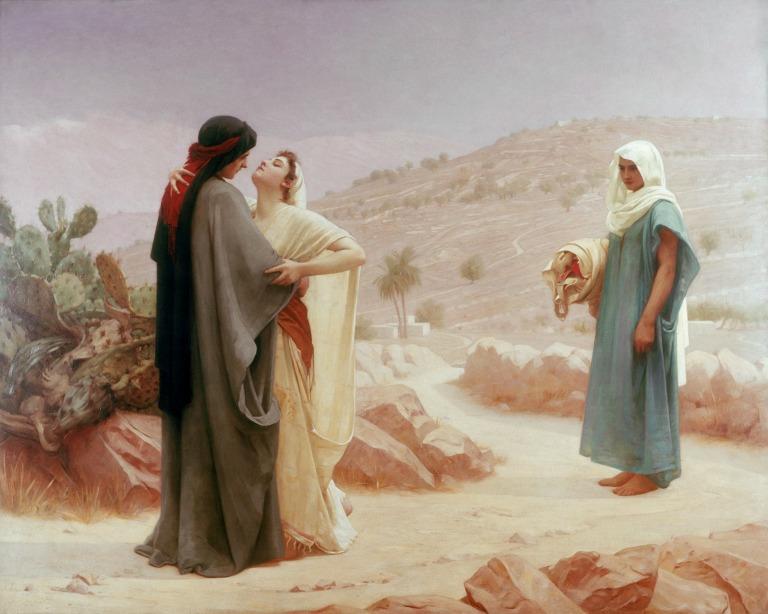

The inclusion of Ruth, a Moabite woman, in the genealogy of King David is one of the most meaningful and theologically rich elements in the narrative of the Book of Ruth. Her story, set during the turbulent era of the Book of Judges, highlights themes of faith, inclusion, loyalty, and divine providence.
Although Ruth was not an Israelite by birth, her loyalty and faith led to her becoming the great-grandmother of King David, Israel’s most celebrated king. This remarkable inclusion communicates powerful spiritual and social lessons that resonate throughout biblical theology and later Christian interpretation.
1. Demonstrating God’s Inclusive Plan
One of the most important aspects of Ruth’s presence in David’s genealogy is the message that God’s plan is not limited by nationality or ethnic boundaries.
Key Points
-
Ruth was from Moab, traditionally a rival nation to Israel.
-
According to earlier Israelite law and tradition, Moabites were often viewed with suspicion or exclusion.
-
Despite this background, Ruth became a central figure in Israel’s royal lineage.
Significance
This inclusion shows that faith and commitment to God matter more than ethnic origin. Ruth’s declaration to Naomi—“Your people shall be my people, and your God my God”—demonstrates her spiritual transformation and devotion.
Her acceptance into Israel’s community reflects a broader biblical message that God welcomes those who choose faith and righteousness regardless of their background.
2. Highlighting the Power of Loyalty and Faithfulness
Another major theme in the story of Ruth is loyalty.
Ruth’s commitment to Naomi, her Israelite mother-in-law, is one of the most famous expressions of devotion in biblical literature.
Examples of Ruth’s Loyalty
-
She refused to abandon Naomi after the death of her husband.
-
She left her homeland of Moab to live among a foreign people.
-
She worked humbly by gleaning in the fields to support Naomi.
These acts illustrate the Hebrew concept of hesed—steadfast love and covenant loyalty.
Significance
Ruth’s loyalty ultimately leads to blessings:
-
She marries Boaz, a respected Israelite.
-
Their son Obed becomes the grandfather of King David.
Thus, the genealogy emphasizes that faithfulness in ordinary acts of kindness can lead to extraordinary outcomes.
3. Illustrating Divine Providence
The story of Ruth appears simple and domestic compared to the wars and political struggles of other biblical books. However, it reveals a deeper message about God’s providence.
Key Events Showing Providence
-
A famine leads Naomi’s family to Moab.
-
Ruth marries into Naomi’s family.
-
After tragedy, Ruth accompanies Naomi back to Bethlehem.
-
Ruth meets Boaz while gleaning in his field.
What may seem like coincidence ultimately forms part of a divine plan that leads to the birth of King David.
Significance
The narrative suggests that God often works through ordinary events and faithful individuals to accomplish larger historical purposes.
4. Preparing the Lineage of Israel’s Greatest King
The genealogy connecting Ruth to King David is crucial because David later becomes the most important king in Israel’s history.
David’s Importance
-
He unites the tribes of Israel.
-
He establishes Jerusalem as the capital.
-
He becomes the standard for future kingship.
By including Ruth in David’s lineage, the narrative demonstrates that Israel’s greatest king descends partly from a foreign woman of faith.
The Genealogical Line
The lineage recorded in the Book of Ruth follows this sequence:
-
Boaz + Ruth
-
Their son Obed
-
Obed’s son Jesse
-
Jesse’s son David
This genealogy underscores the surprising and gracious nature of God’s plan.
5. Emphasizing the Role of Women in God’s Story
In ancient genealogies, women were rarely mentioned. The presence of Ruth therefore carries additional significance.
Why Ruth’s Inclusion Matters
-
It highlights the essential role women play in God’s redemptive plan.
-
It celebrates virtues such as loyalty, humility, and courage.
-
It shows that influence does not always come through political or military power.
Ruth’s quiet acts of kindness ultimately shape the future of Israel.
6. Foreshadowing a Universal Salvation Theme
Later biblical traditions expand the significance of Ruth’s story.
In the genealogy of Jesus presented in the Gospel of Matthew, Ruth is again mentioned as an ancestor. This reinforces the theme that God’s salvation extends beyond ethnic Israel.
Theological Implications
-
God’s kingdom includes people from all nations.
-
Faith and righteousness are more important than lineage.
-
Outsiders can become central participants in God’s purposes.
Thus, Ruth’s story foreshadows the later expansion of God’s covenant to the wider world.
7. A Narrative of Redemption
Another key theme in Ruth’s story is redemption.
Boaz acts as a “kinsman-redeemer”, a relative who restores the family’s inheritance and future by marrying Ruth. This act ensures Naomi’s family line continues and ultimately leads to the birth of David.
Symbolic Meaning
-
Restoration after tragedy
-
Protection of vulnerable individuals
-
Continuation of family heritage
This redemption motif becomes a powerful metaphor in later biblical theology.
Conclusion
The inclusion of the Moabite Ruth in the genealogy of King David carries profound theological, historical, and moral significance. Her story demonstrates that God’s plan transcends ethnic boundaries, honors loyalty and faithfulness, and works through humble circumstances to accomplish extraordinary purposes.
Ruth’s journey—from a foreign widow in Moab to the great-grandmother of Israel’s greatest king—reveals a powerful message: faith, love, and commitment to God can transform both individual lives and the course of history.
Her presence in David’s lineage reminds readers that God often chooses unexpected people to fulfill divine purposes and that true belonging in God’s community is determined not by birth but by faith.
Comments are closed.