**How Did God Create the Heavens and the Earth?
A Detailed Biblical Explanation**
Introduction
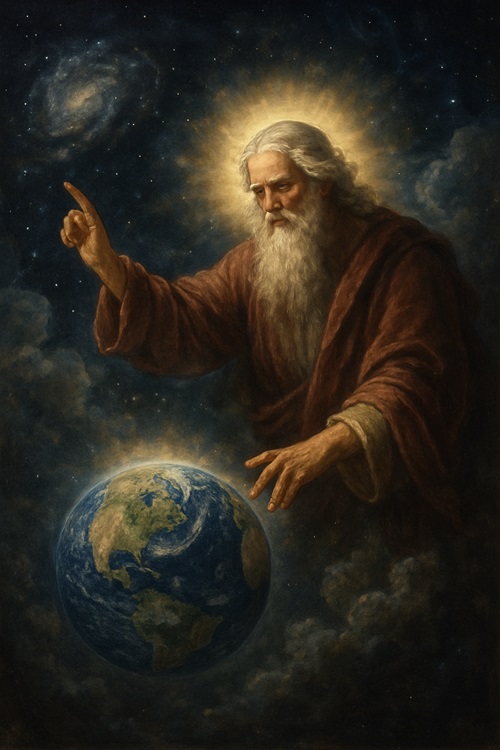
The question “How did God create the heavens and the earth?” is one of the most foundational inquiries in the Bible. The creation account is found primarily in Genesis 1:1–2:3, with additional detail in Genesis 2:4–25. These chapters describe God’s creative work in a structured, purposeful, and orderly manner.
Genesis does not present creation as an accident or the result of conflict between gods (as in ancient pagan myths). Instead, it presents one sovereign God who brings all things into existence by His word.
“In the beginning God created the heavens and the earth.” (Genesis 1:1)
This opening verse summarizes the entire act of creation: God, not chance, is the Creator; the beginning, not eternity, is when creation started; the heavens and the earth, meaning all of reality, came from His power.
1. The Method of Creation: God Spoke
The Bible repeatedly states, “And God said…” (Genesis 1).
This shows that the primary method of creation was:
✔ Creation by Divine Command
God’s word itself has power. He does not need tools, materials, or assistance.
Every act starts with God speaking, and what He commands instantly comes into being.
✔ Creation Out of Nothing (Ex Nihilo)
Genesis 1:1 and Hebrews 11:3 affirm that God created the universe from nothing.
Nothing existed before except God Himself.
“By faith we understand that the universe was created by the word of God, so that what is seen was not made out of things that are visible.” (Hebrews 11:3)
2. The Creation Week: Day-by-Day Account
Day 1 — Light and Darkness (Genesis 1:3–5)
God said, “Let there be light,” and light appeared.
He separated light from darkness, creating day and night.
Key Point: God is the source of order, separation, and rhythm.
Day 2 — Sky / Firmament (Genesis 1:6–8)
God created an expanse (Hebrew: raqia), separating:
-
Waters below (oceans)
-
Waters above (clouds/atmosphere)
This formed the sky.
Day 3 — Land, Seas, and Vegetation (Genesis 1:9–13)
God gathered the waters into seas and revealed dry land.
Then He created:
-
Trees
-
Plants
-
Grass
-
Vegetation producing seed “according to its kind”
Key Point: Creation is orderly, designed, and capable of reproducing life.
Day 4 — Sun, Moon, and Stars (Genesis 1:14–19)
God placed lights in the heavens:
-
Sun to govern the day
-
Moon to govern the night
-
Stars to fill the heavens
They serve for:
-
Signs
-
Seasons
-
Days
-
Years
Note: Light existed before the sun (Day 1).
This shows that light’s origin is ultimately God, not the sun.
Day 5 — Sea Creatures and Birds (Genesis 1:20–23)
God created:
-
Fish
-
Sea creatures large and small
-
Birds of the sky
He blessed them and commanded them to multiply.
Day 6 — Land Animals and Humanity (Genesis 1:24–31)
God created animals:
-
Livestock
-
Wild animals
-
Creeping things
Then the pinnacle of creation:
Humanity (Man and Woman)
“Let us make man in our image, after our likeness.” (Genesis 1:26)
Humans were created to:
-
Reflect God’s image
-
Rule over creation
-
Steward the earth
Man (Adam) was formed from dust.
Woman (Eve) was formed from Adam’s rib.
Together they bear God’s image and represent Him on earth.
Day 7 — God Rested (Genesis 2:1–3)
God “rested” not because He was tired, but because His work was complete.
He blessed and sanctified the seventh day.
3. The Structure of Creation
The creation narrative is intentionally structured.
Forming (Days 1–3)
God shapes the environment.
-
Light/darkness
-
Sky/waters
-
Land/vegetation
Filling (Days 4–6)
God fills what He formed.
4. Sun/moon/stars
5. Birds/fish
6. Animals/humans
This reveals:
-
Order, not randomness
-
Purpose, not chaos
-
Design, not accident
4. Theological Themes in the Creation Account
A. God Is Supreme
He creates without struggle and with complete authority.
B. Creation Is Good
After each day, God declares His creation “good.”
After humanity is created, He calls it “very good.”
C. God Is Personal
He speaks, blesses, forms, and breathes life.
Especially with humanity, the relationship is intimate.
D. Humans Have Purpose
Humans are not accidents.
They exist to:
-
Know God
-
Reflect His image
-
Rule creation responsibly
-
Live in harmony with Him
5. How Genesis 2 Expands the Creation Story
Genesis 1 is a cosmic overview.
Genesis 2 is a close-up view focusing on humanity.
It explains:
-
How Adam was formed
-
How Eden was prepared
-
Why Eve was created
-
The purpose of marriage
Genesis 2 emphasizes relationship, work, and companionship.
6. Conclusion
According to the Bible, God created the heavens and the earth through His sovereign, powerful word. The creation account reveals a purposeful, orderly, and good universe designed by a wise Creator. Humanity stands at the center of God’s creative intention, made in His image to know Him and steward His creation.
The story of creation is not merely about origins—
it is about God’s character, our identity, and the foundation of all Scripture.
Comments are closed.