Ruth and Boaz as a Type of Christ’s Redemptive Work for the Church


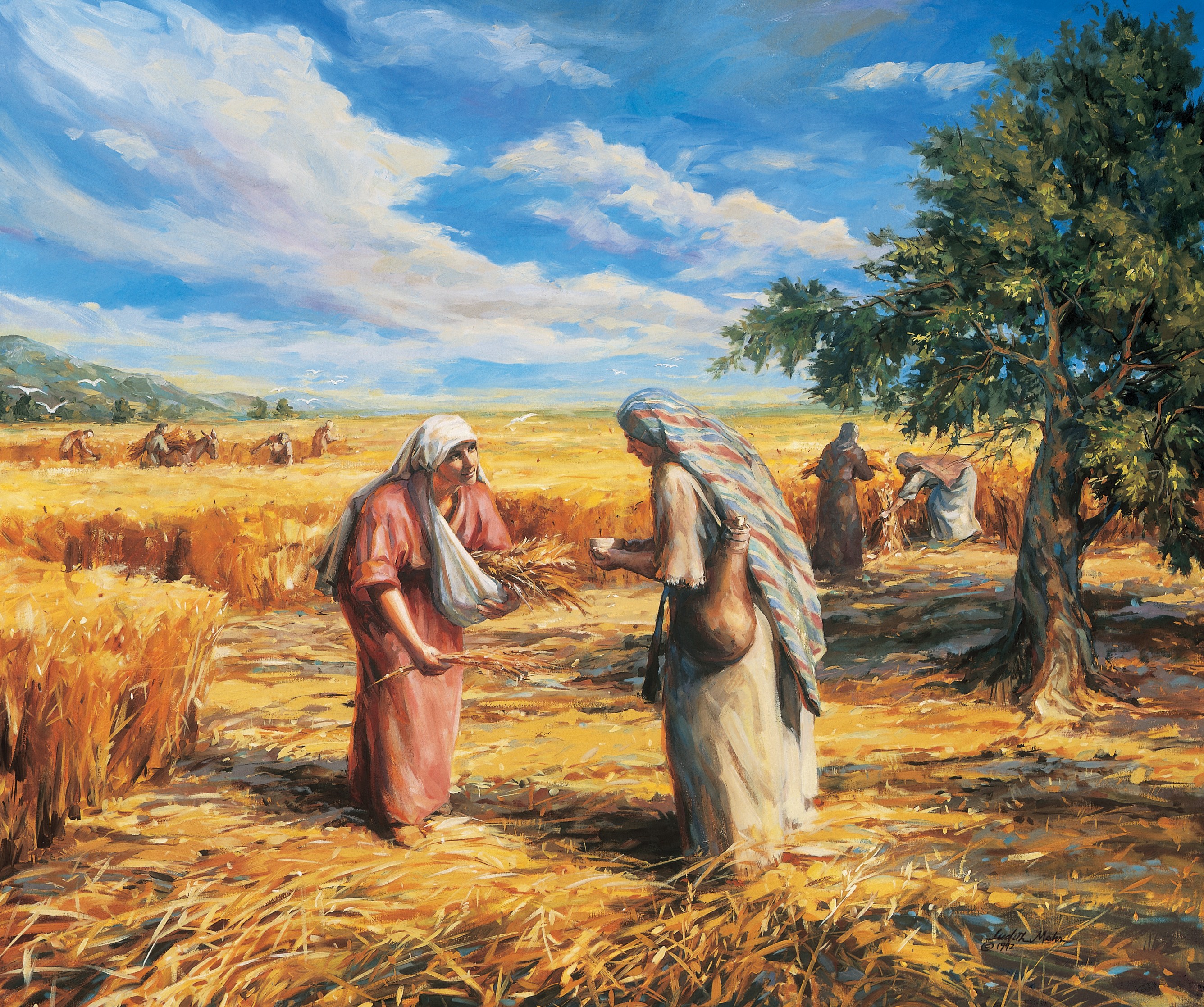
The story of Book of Ruth is one of the most beautiful narratives in Scripture. It tells how Ruth, a widowed foreigner, finds redemption through the kindness and marriage of Boaz. Beyond its historical account, this story carries profound theological symbolism. Many Christian interpreters understand the relationship between Ruth and Boaz as a type or foreshadowing of the redemptive work of Jesus Christ for the Church.
Typology in the Bible occurs when events, persons, or institutions in the Old Testament point forward to greater fulfillment in Christ. In this sense, Boaz functions as a “kinsman-redeemer,” prefiguring Christ’s role as the Redeemer of humanity, while Ruth represents the redeemed people who become part of God’s covenant family.
Understanding the Concept of the Kinsman-Redeemer
A key theme in the story is the Hebrew concept of the kinsman-redeemer (goel). According to Israelite law, a close relative had the responsibility to restore the fortunes of a family member who had lost property, freedom, or inheritance.
The responsibilities of a kinsman-redeemer included:
-
Redeeming land that a poor relative had sold
-
Protecting vulnerable family members
-
Marrying a widow to preserve the family lineage
-
Restoring the family name and inheritance
In the narrative, Boaz willingly assumes this role for Ruth and her mother-in-law Naomi. Through his actions, he restores their security, inheritance, and place in the community. This redemptive act forms the basis for understanding the story as a symbol of Christ’s redemption.
Ruth as a Picture of the Church
Ruth’s personal story mirrors many aspects of humanity’s spiritual condition before salvation.
1. Ruth Was an Outsider
Ruth was a Moabite, meaning she was not originally part of Israel’s covenant people. Her status as a foreigner highlights her vulnerability and exclusion.
This parallels the spiritual situation of the Church before redemption. According to Christian theology, humanity is separated from God and outside His covenant blessings until redeemed through Christ.
Key similarities include:
-
Ruth was a stranger and outsider
-
She lacked inheritance and protection
-
She depended entirely on grace for acceptance
Likewise, believers are brought into God’s family through the redeeming work of Christ.
2. Ruth Came in Humility and Faith
Ruth’s famous declaration to Naomi demonstrates extraordinary faith and loyalty:
“Your people shall be my people, and your God my God.”
This decision required Ruth to leave her homeland, culture, and security. Her humility is also seen when she gleans leftover grain in the fields of Boaz.
Her posture reflects the spiritual response required for salvation:
-
Humility before God
-
Trust in His provision
-
Commitment to follow Him
Thus Ruth symbolizes the Church approaching Christ in faith.
Boaz as a Type of Christ
Boaz’s character and actions strongly parallel the role of Christ in the New Testament.
1. Boaz Was a Qualified Redeemer
To serve as a redeemer, a person had to meet specific requirements:
-
He had to be a close relative
-
He had to have the resources to redeem
-
He had to be willing to redeem
Boaz met all these qualifications.
In a similar way, Christ became human to redeem humanity. By taking on human nature, Christ became our true kinsman capable of redeeming us.
Key parallels include:
-
Boaz related to Naomi’s family
-
Christ became human to relate to humanity
-
Both acted as legitimate redeemers
2. Boaz Redeemed at a Personal Cost
Boaz redeemed Ruth and Naomi’s inheritance by purchasing the land and marrying Ruth. This required financial sacrifice and public commitment.
Similarly, Christ’s redemption required an even greater cost. According to Christian teaching, Christ redeemed humanity through His sacrificial death on the cross.
Both acts demonstrate:
-
Redemption requires a price
-
The redeemer willingly bears the cost
-
The redeemed receive restored inheritance
3. Boaz Acted with Grace and Compassion
Boaz showed remarkable kindness to Ruth long before marrying her.
He:
-
Allowed her to glean freely
-
Protected her from harm
-
Provided extra grain for her needs
-
Spoke words of blessing and encouragement
These actions demonstrate grace extended to someone who had no legal claim.
This mirrors the grace of Christ toward sinners. Salvation is not earned but given freely through divine mercy.
The Marriage as a Symbol of Union with Christ
One of the most powerful typological elements is the marriage between Ruth and Boaz.
Marriage in Scripture often symbolizes the covenant relationship between Christ and the Church. The union of Ruth and Boaz illustrates several spiritual realities:
Covenant Relationship
Just as Ruth entered a covenant marriage with Boaz, believers enter a covenant relationship with Christ.
New Identity
After her marriage, Ruth became fully integrated into Israel’s community and inheritance.
Likewise, believers receive a new identity as part of God’s family.
Fruitful Legacy
The union of Ruth and Boaz produced a son named Obed, who became the grandfather of King David.
This lineage ultimately leads to Jesus Christ, emphasizing how redemption in Ruth’s story contributes to God’s greater plan of salvation.
Redemption That Transforms History
Another remarkable aspect of the story is its place in the genealogy of Christ.
Ruth, once a foreign widow, becomes part of the royal line leading to Jesus. This transformation illustrates the power of redemption to change a person’s destiny.
Important outcomes of Boaz’s redemption include:
-
Naomi’s family inheritance restored
-
Ruth included in Israel’s covenant community
-
A lineage leading to King David
-
Ultimately contributing to the arrival of Christ
Thus the story shows how God works through redemption to fulfill His larger purposes.
Theological Significance of the Typology
The typological connection between Ruth and Christ highlights several theological truths:
-
Redemption comes through a willing redeemer
-
Grace extends to outsiders and the vulnerable
-
Faith and humility open the door to salvation
-
Redemption leads to covenant relationship
Through the story of Ruth and Boaz, Scripture provides a vivid preview of the greater redemption accomplished by Christ.
Conclusion
The narrative of Ruth and Boaz is far more than a simple love story. It is a powerful illustration of redemption that foreshadows the work of Christ. Ruth represents humanity—vulnerable, excluded, and in need of redemption—while Boaz serves as the compassionate redeemer who restores her inheritance and future.
In Christian theology, this story ultimately points to Jesus Christ, who redeems the Church through grace, sacrifice, and covenant love. Just as Ruth found refuge under Boaz’s protection, believers find eternal redemption in Christ.
Comments are closed.