The Genealogical Ending of the Book of Ruth and the Future Hope of Israel’s Kingship
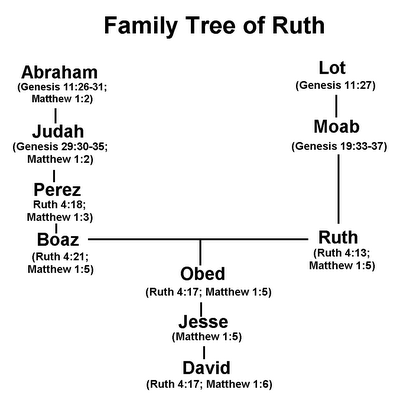
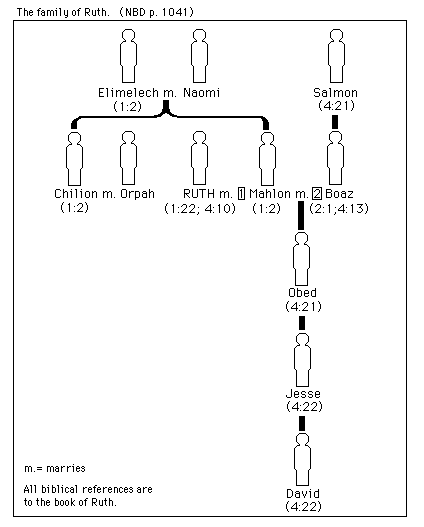
The concluding verses of the Book of Ruth (Ruth 4:18–22) contain a short genealogy that traces a family line from Perez to King David. At first glance, this list of names may appear to be a simple historical record. However, the genealogy plays a profound theological and narrative role. It reveals how God’s providence works through ordinary lives to prepare the way for Israel’s future kingship.
By ending with the birth line leading to David, the story connects the faithfulness of Ruth and Boaz to the rise of Israel’s monarchy. This genealogical conclusion transforms the personal story of loyalty and redemption into a national story of hope for Israel.
1. The Genealogy in Ruth 4:18–22
The final verses of the book present a lineage:
-
Perez
-
Hezron
-
Ram
-
Amminadab
-
Nahshon
-
Salmon
-
Boaz
-
Obed
-
Jesse
-
David
This genealogy highlights that Obed, the son born to Ruth and Boaz, became the father of Jesse, who in turn became the father of David.
The significance lies in the final name: David. During the time described in Ruth, Israel had no king, and society often descended into chaos. The genealogy therefore provides a narrative bridge from the troubled era of the judges to the future establishment of a righteous monarchy.
2. The Context: Israel in the Time of the Judges
The events in the Book of Ruth occur during the period of the Book of Judges. This era was characterized by political instability and spiritual decline.
The recurring theme in Judges is summarized by the statement:
“In those days there was no king in Israel; everyone did what was right in his own eyes.”
This context highlights the need for stable leadership. By concluding with David’s genealogy, the Book of Ruth subtly suggests that God was already preparing the solution to Israel’s leadership crisis.
Thus, the genealogy is not merely historical—it anticipates the coming of a king who would bring unity and justice.
3. The Role of Ruth and Boaz in God’s Plan
One of the most striking aspects of the genealogy is the inclusion of Ruth herself.
A Foreign Woman in Israel’s Royal Line
Ruth was a Moabite, meaning she was not originally part of Israel. Yet her loyalty to Naomi and her faith in Israel’s God led her to become part of God’s covenant people.
Her inclusion in the royal lineage highlights several important themes:
-
God’s grace extends beyond ethnic boundaries.
-
Faithfulness matters more than nationality.
-
God often works through unexpected people.
The marriage between Ruth and Boaz resulted in the birth of Obed, ensuring the continuation of a family line that would eventually produce Israel’s greatest king.
4. The Significance of Obed and Jesse
The birth of Obed marked a turning point for Naomi and for Israel’s future.
The women of Bethlehem celebrated the child, recognizing that Naomi’s life had been restored through him. Yet the narrative quickly moves beyond the immediate family story to emphasize the larger historical implications.
Obed became the father of Jesse, and Jesse became the father of David.
This simple generational sequence demonstrates how God’s redemptive purposes unfold gradually across generations.
Key implications include:
-
The restoration of Naomi’s family line.
-
The preservation of the tribe of Judah’s leadership lineage.
-
The preparation for Israel’s future monarchy.
5. David as the Fulfillment of the Hope
The genealogy culminates with David, who later became Israel’s greatest king.
David’s reign brought:
-
Political unity among the tribes of Israel
-
Military victories over surrounding enemies
-
The establishment of Jerusalem as Israel’s capital
-
The foundation for a royal dynasty
By connecting Ruth’s story to David’s ancestry, the book reveals that God was quietly preparing the future king during the chaotic days of the judges.
This literary ending transforms a local family narrative into a national theological message.
6. The Genealogy as a Bridge in Biblical History
The genealogical ending of Ruth functions as an important bridge in the biblical storyline.
From Chaos to Kingship
The story moves from:
-
The instability of the Judges period
-
To the rise of the Davidic monarchy
This transition shows how God’s providence operates behind the scenes.
From Personal Redemption to National Redemption
Ruth’s redemption by Boaz mirrors the broader redemption of Israel through righteous leadership.
Boaz acts as a kinsman-redeemer, restoring Naomi’s family line. In a similar way, David later becomes the leader who restores unity and stability to the nation.
7. Theological Themes in the Genealogy
The genealogical ending emphasizes several theological ideas:
1. God Works Through Ordinary Lives
The story focuses on everyday people rather than powerful leaders.
-
A widowed immigrant (Ruth)
-
A grieving mother-in-law (Naomi)
-
A compassionate landowner (Boaz)
Yet through their faithfulness, God shapes Israel’s future.
2. Faithfulness Leads to Blessing
Ruth’s loyalty and Boaz’s integrity ultimately produce a legacy that blesses the entire nation.
3. God’s Plan Unfolds Across Generations
The genealogy reminds readers that divine purposes often develop slowly across time.
8. Messianic Implications
While the book directly points to David, later biblical writings extend the significance of this genealogy even further.
David’s dynasty eventually becomes the royal line through which the Messiah is expected to come. Thus, the genealogy in Ruth is not only about Israel’s past but also about its future hope.
In this sense, the closing verses of Ruth foreshadow a broader story of redemption that continues throughout the Bible.
Conclusion
The genealogical ending of the Book of Ruth serves as a powerful narrative and theological conclusion. By tracing the line from Perez to King David, the book reveals how God used the faithfulness of Ruth and Boaz to prepare the way for Israel’s monarchy.
What begins as a quiet story about family loyalty ultimately becomes a story about national hope. In the midst of the chaotic era of the judges, God was already laying the foundation for a king who would bring unity and stability to Israel.
Thus, the genealogy is far more than a list of names—it is a declaration that God’s purposes are unfolding, even through the smallest and most unexpected events in history.
Comments are closed.