Caring for the Marginalized in the Book of Ruth
The Book of Ruth is one of the most powerful narratives in the Old Testament that demonstrates the importance of caring for vulnerable members of society. Set during the chaotic era of the Book of Judges, the story focuses on compassion, loyalty, and social responsibility toward marginalized people—especially widows and foreigners. Through the lives of Ruth, Naomi, and Boaz, the narrative illustrates how ancient Israelite law and ethical values emphasized protecting those without social power.
In ancient Israel, widows, orphans, and foreigners were among the most vulnerable groups because they lacked economic security and family protection. The Book of Ruth highlights how compassion, generosity, and obedience to God’s laws could restore dignity and hope to those who were marginalized.
Social Vulnerability in Ancient Israel
Ancient Israelite society was structured around family and land ownership. Individuals who did not belong to a strong household were often exposed to poverty and injustice.
Key Vulnerable Groups
The Hebrew Scriptures frequently mention three groups that required special care:
-
Widows – Women whose husbands had died often had no financial support.
-
Orphans – Children without fathers lacked legal and economic protection.
-
Foreigners (sojourners) – Non-Israelites living in the land were outsiders without inheritance rights.
Both Ruth and Naomi represent marginalized individuals in this story.
-
Naomi becomes a widow after the death of her husband and sons.
-
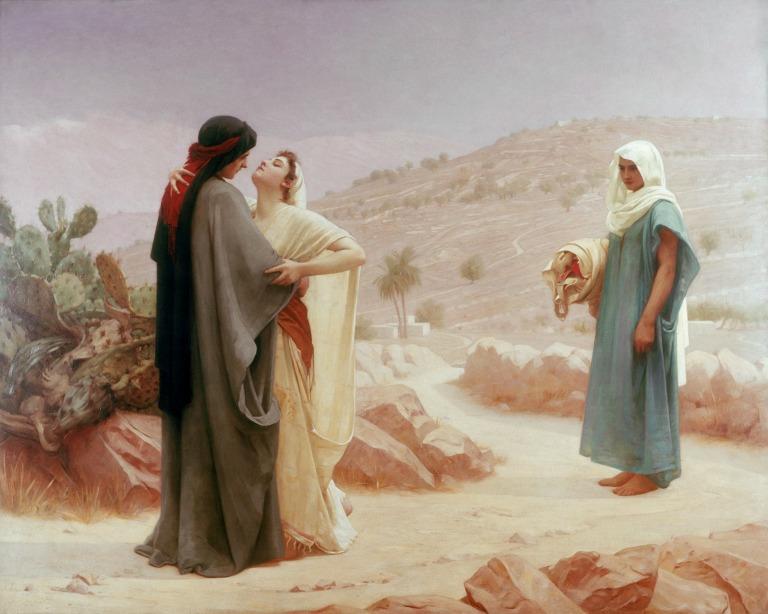
Ruth is a Moabite foreigner who leaves her homeland to care for Naomi.
Because of these circumstances, the two women return to Bethlehem with almost nothing, demonstrating the harsh reality faced by widows and migrants in the ancient world.
Ruth as a Foreigner Seeking Belonging
One of the most remarkable aspects of the Book of Ruth is that its central heroine is a foreigner. Ruth comes from Moab, a nation often viewed negatively by Israelites.
Despite this, Ruth demonstrates extraordinary loyalty when she says to Naomi:
“Where you go I will go, and where you stay I will stay.”
This commitment highlights several important themes:
-
Loyalty beyond nationality
-
Faith in the God of Israel
-
Sacrificial care for family
Ruth’s willingness to leave her homeland reflects the struggles migrants and foreigners face when entering a new society. The story shows that righteousness and kindness—not ethnicity—define true belonging in God’s community.
The Gleaning System: Protection for the Poor
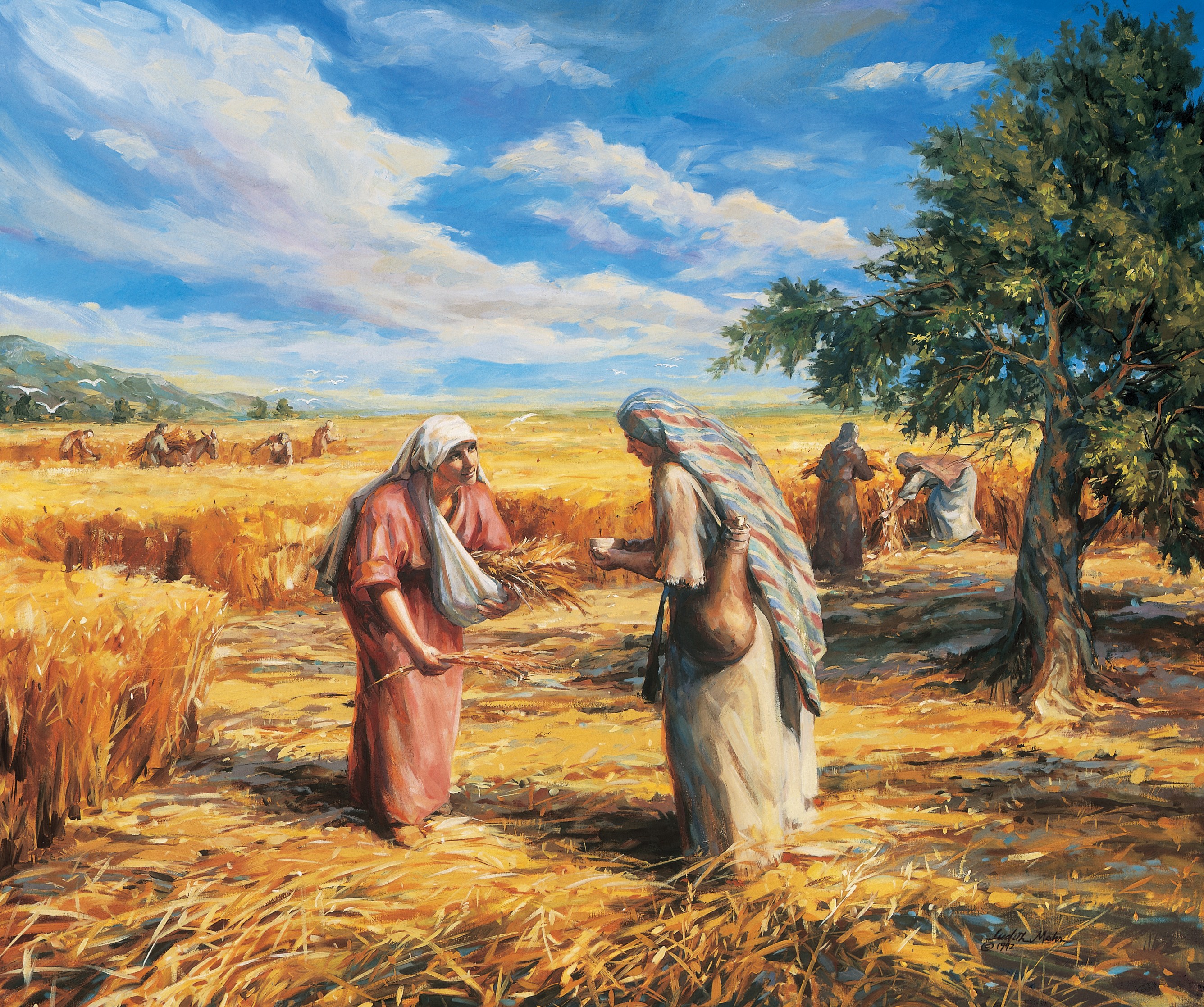
A major theme in the Book of Ruth is the ancient practice of gleaning, which provided food for the poor.
According to Israelite law, landowners were commanded not to harvest every grain from their fields. Instead, they were to leave portions for widows, orphans, and foreigners.
Purpose of Gleaning
Gleaning allowed vulnerable people to gather leftover crops after harvest. This system:
-
Provided food security
-
Preserved human dignity through work
-
Encouraged generosity among landowners
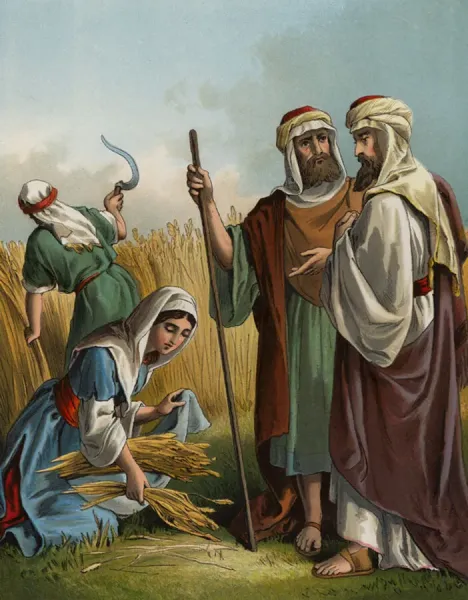
When Ruth arrives in Bethlehem, she gleans in the fields belonging to Boaz. This moment demonstrates how biblical law created opportunities for marginalized individuals to survive.
Boaz as a Model of Compassionate Leadership
Boaz represents the ideal Israelite landowner who faithfully follows God’s law. His actions toward Ruth illustrate ethical responsibility toward outsiders.
Boaz’s Compassionate Actions
Boaz demonstrates kindness in several ways:
-
Protecting Ruth from harassment by workers
-
Allowing her to glean freely in his fields
-
Providing extra grain and food
-
Ensuring her safety
Rather than merely obeying the minimum requirements of the law, Boaz goes beyond them. His generosity highlights the moral principle that caring for the vulnerable should be active and compassionate.
The Role of Family Redemption
Another key concept in the story is the role of the kinsman-redeemer, a relative responsible for protecting the family line.
As a kinsman-redeemer, Boaz fulfills several responsibilities:
-
Redeeming family property
-
Marrying Ruth to preserve the family line
-
Restoring Naomi’s security
Through this act, Boaz helps transform Ruth and Naomi’s situation from poverty to stability.
This reflects an important cultural value in ancient Israel: family members had a duty to protect and restore vulnerable relatives.
Community Responsibility in the Story
The Book of Ruth shows that caring for marginalized individuals is not only a personal act but also a community responsibility.
By the end of the story:
-
The community witnesses the marriage of Ruth and Boaz.
-
Naomi’s suffering is replaced with joy.
-
Ruth becomes part of Israel’s lineage.
In fact, Ruth eventually becomes the great-grandmother of King David, demonstrating that God’s plan includes people from unexpected backgrounds.
This outcome emphasizes that when societies welcome outsiders and care for the vulnerable, they create a stronger and more compassionate community.
Key Lessons from the Book of Ruth
The narrative offers several timeless lessons about social justice and compassion.
1. Compassion Should Extend to Outsiders
The story challenges prejudice by portraying a foreign woman as a model of faithfulness.
2. Laws Should Protect the Vulnerable
Ancient Israelite laws such as gleaning ensured that widows, orphans, and foreigners had access to food and dignity.
3. Generosity Should Go Beyond Obligation
Boaz demonstrates that true righteousness includes kindness beyond legal requirements.
4. Loyalty and Faithfulness Transform Communities
The devotion between Ruth and Naomi shows how mutual care can overcome hardship.
Conclusion
The Book of Ruth highlights the importance of caring for marginalized people within ancient Israelite society. Through the experiences of Ruth, Naomi, and Boaz, the narrative demonstrates how compassion, justice, and hospitality can restore dignity to those who are vulnerable.
By emphasizing support for widows, foreigners, and the poor, the Book of Ruth reflects the broader biblical vision of a community where mercy and responsibility guide social relationships. The story ultimately teaches that caring for the marginalized is not merely charity—it is a central expression of faith and righteousness.