Goliath as a Symbol of Military Threat and Spiritual Defiance
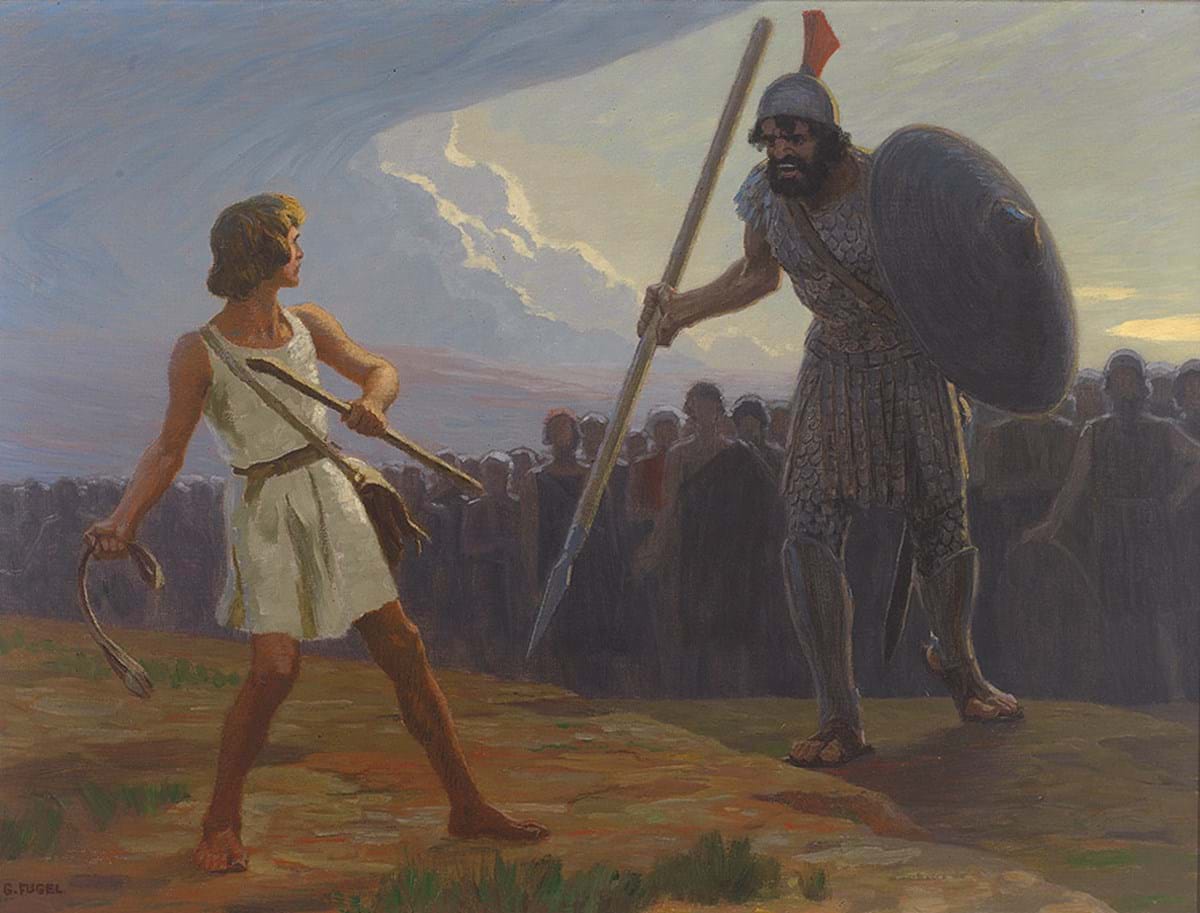

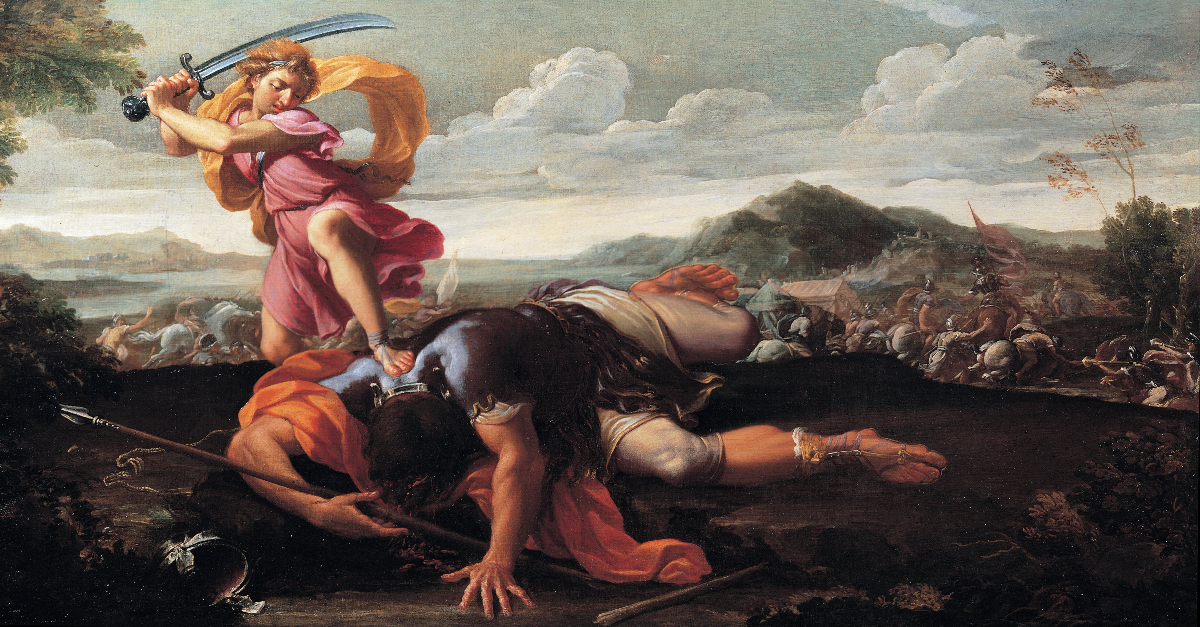
The story of Goliath and David in Book of 1 Samuel chapter 17 is one of the most powerful narratives in the Bible. At first glance, Goliath appears simply as a massive warrior threatening Israel’s army. However, a deeper reading shows that he represents much more than physical danger.
Goliath symbolizes spiritual rebellion and defiance against God Himself. His words, attitude, and challenge reveal that the real battle in the Valley of Elah was not just between two armies but between faith in the living God and arrogant opposition to divine authority.
The Historical Setting of the Battle
The confrontation occurred between the Philistines and the Israelites. Both armies stood on opposite hills with the valley between them. Instead of engaging in full-scale war, the Philistines presented a champion—Goliath—to fight on behalf of their entire army.
According to 1 Samuel 17, Goliath:
-
Came from the Philistine city of Gath
-
Was described as over nine feet tall
-
Wore heavy bronze armor
-
Carried a massive spear and shield
-
Appeared daily for forty days to challenge Israel
From a military perspective, he was terrifying. Yet the biblical narrative emphasizes that his words and attitude were even more significant than his physical strength.
Goliath as a Military Threat
1. Physical Power and Intimidation
Goliath’s enormous size and impressive armor were designed to intimidate. Ancient warfare often depended on psychological dominance, and Goliath embodied this strategy.
His armor alone weighed over 100 pounds, and the iron tip of his spear weighed several kilograms. This made him appear invincible compared to the ordinary soldiers of Israel.
His physical advantages included:
-
Exceptional height and strength
-
Superior weaponry
-
Professional battle experience
-
A shield-bearer walking before him
This overwhelming presence created fear among the Israelite army, including King Saul.
2. Psychological Warfare
Goliath did not merely appear on the battlefield—he taunted and mocked the Israelites every day.
His challenge included statements such as:
-
“Choose a man and have him come down to me.”
-
“If he kills me, we will become your subjects.”
-
“I defy the armies of Israel today.”
These taunts had a strategic purpose:
-
To humiliate Israel
-
To provoke fear
-
To demonstrate Philistine superiority
-
To weaken the morale of Israel’s soldiers
Because no one stepped forward, the Israelites appeared powerless before their enemy.
Goliath as a Symbol of Spiritual Defiance
While Goliath’s military threat was real, the Bible emphasizes that his greatest offense was spiritual. His words show that he was not only challenging Israel but also mocking the God of Israel.
1. Defying the Armies of the Living God
David recognized what others failed to see. He asked:
“Who is this uncircumcised Philistine that he should defy the armies of the living God?”
This statement reveals the deeper issue. Goliath’s challenge was not merely against soldiers—it was against God’s covenant people and therefore against God Himself.
In biblical thinking:
-
Insulting God’s people meant insulting God
-
Mocking God’s army meant mocking God’s authority
Goliath’s arrogance therefore represented spiritual rebellion.
2. Pride and Arrogance Against God
The Bible frequently presents pride as a serious spiritual danger. Goliath embodied this pride through:
-
Confidence in his own strength
-
Contempt for Israel’s God
-
Mockery of David’s youth
-
Boasting in weapons and power
When David confronted him, Goliath laughed and cursed him by his gods. This shows that the confrontation also represented a conflict between belief systems—the worship of the true God versus pagan gods.
3. Trust in Human Power Instead of Divine Authority
Goliath relied entirely on physical power:
-
Weapons
-
Armor
-
Military experience
-
Intimidation
David, however, approached the battle differently. He declared:
“You come to me with sword and spear and javelin, but I come to you in the name of the Lord Almighty.”
This contrast highlights the spiritual lesson of the story:
-
Goliath trusted human strength
-
David trusted God’s power
The victory of David demonstrated that faith in God is greater than military might.
Why Israel Was Initially Afraid
The Israelites’ fear reveals another important spiritual theme. They saw the situation only from a human perspective.
They focused on:
-
Goliath’s size
-
His weapons
-
Their own weakness
As a result, they forgot God’s past faithfulness and power.
David, on the other hand, remembered how God had helped him defeat a lion and a bear while protecting his sheep. His faith allowed him to see the situation differently.
This difference in perspective explains why:
-
Soldiers saw an unbeatable giant
-
David saw a man opposing God
The Spiritual Meaning of Goliath’s Defeat
David’s victory over Goliath carries profound theological significance.
1. God Defends His Honor
When Goliath mocked Israel, he challenged God’s reputation. David understood that the battle was about God’s glory.
The victory showed that:
-
God protects His name
-
God defends His people
-
God cannot be mocked without consequence
2. Faith Is More Powerful Than Strength
David defeated Goliath with:
-
A sling
-
A single stone
-
Complete trust in God
This outcome illustrates that spiritual faith is stronger than physical force.
3. God Uses Unexpected People
David was:
-
A shepherd
-
The youngest son in his family
-
Not a trained soldier
Yet God used him to defeat Israel’s greatest enemy. This demonstrates a recurring biblical theme: God often uses unlikely individuals to accomplish His purposes.
Lessons for Modern Readers
The story of Goliath continues to inspire believers because it represents struggles that people still face today.
Key Lessons
-
Spiritual battles are often behind visible conflicts
-
Pride and arrogance oppose God
-
Faith can overcome overwhelming challenges
-
God’s power is greater than human strength
Just as Goliath symbolized defiance against God, many challenges today can represent spiritual opposition to faith and righteousness.
Conclusion
Goliath was far more than a giant warrior threatening Israel’s army. He represented arrogance, rebellion, and open defiance against God. His challenge in the Valley of Elah was both a military confrontation and a spiritual conflict.
David’s victory showed that the true power in the battle did not come from weapons or physical strength but from faith in God. The defeat of Goliath demonstrated that no matter how intimidating the enemy may appear, God’s authority ultimately prevails over every form of spiritual defiance.
What is the significance of David being chosen as Saul’s musician?
Comments are closed.