Boaz’s Respect for God’s Commands in His Willingness to Marry Ruth
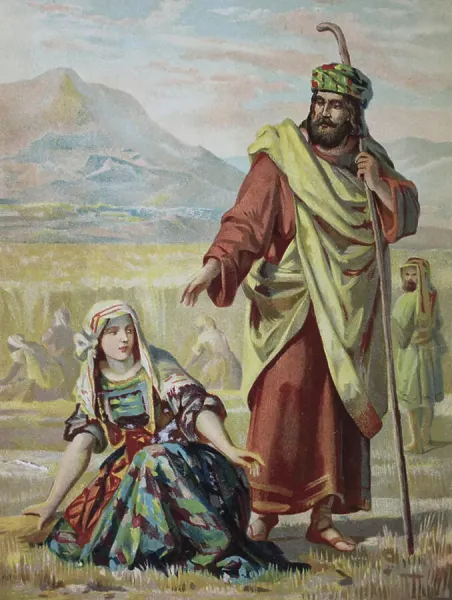


The story of Book of Ruth presents one of the most beautiful examples of faithfulness, compassion, and obedience to God’s law in the Bible. At the center of this story are two remarkable individuals: Boaz and Ruth.
Boaz’s willingness to marry Ruth—despite the legal complexities surrounding land redemption and family inheritance—demonstrates his deep respect for God’s commands. His actions reveal that obedience to God involves more than simply following rules; it requires integrity, responsibility, and compassion for others.
This article explores how Boaz’s decision reflects a sincere commitment to God’s law and a model of righteous leadership.
1. Understanding the Legal Complexity in the Story
To understand Boaz’s decision, it is important to recognize the legal framework in ancient Israel. Two major laws influenced the situation:
The Law of the Kinsman-Redeemer
In ancient Israelite society, a close relative called a kinsman-redeemer had the responsibility to restore property or protect family members who had fallen into hardship.
Responsibilities included:
-
Redeeming family land that had been sold
-
Protecting widows within the family
-
Preserving the family lineage
-
Restoring social and economic stability
Boaz was a relative of Naomi’s deceased husband, making him eligible to serve as a redeemer.
The Levirate Marriage Principle
Another law required a relative to marry a widow so that the deceased man’s family line would continue. Although this law normally applied to brothers, the principle influenced the broader concept of family responsibility.
This meant that marrying Ruth was not just a romantic decision—it involved legal duty, property rights, and social responsibility.
2. Boaz Carefully Honored the Law
Rather than acting impulsively, Boaz demonstrated great respect for God’s commands by carefully following the proper legal process.
At the city gate of Bethlehem, he publicly addressed the matter with elders and witnesses.
His actions showed several important qualities:
-
Transparency: He handled the matter publicly.
-
Legal integrity: He acknowledged that another relative had the first right to redeem the land.
-
Respect for tradition: He followed established customs for transferring redemption rights.
Instead of bypassing the law to marry Ruth immediately, Boaz allowed the closer relative the opportunity to fulfill his duty first.
This demonstrates that Boaz respected God’s commands even when the outcome was uncertain.
3. Boaz Accepted Responsibility When Others Refused
The unnamed closer relative initially agreed to redeem Naomi’s land but withdrew when he realized it also required marrying Ruth.
His refusal likely stemmed from concerns such as:
-
Risk to his own inheritance
-
Financial obligations
-
Complicated family claims
Boaz, however, responded differently.
Instead of avoiding responsibility, he willingly stepped forward and said he would redeem the land and marry Ruth.
This willingness shows that Boaz valued obedience to God’s law above personal convenience.
4. Boaz Demonstrated Compassion and Righteous Character
Boaz’s decision was not merely about fulfilling a legal requirement. It also reflected his compassion and moral character.
Throughout the story, Boaz shows kindness toward Ruth:
-
He allows her to glean in his fields.
-
He instructs workers to protect her.
-
He provides extra food and provisions.
-
He praises her loyalty to Naomi.
These actions show that Boaz understood the spirit of God’s law, not just the letter of it.
God’s commandments were designed to protect the vulnerable—especially widows, foreigners, and the poor. Ruth was all three.
By marrying her, Boaz lived out the deeper purpose of God’s commands.
5. Boaz Preserved the Family Legacy
Another reason Boaz’s actions demonstrate respect for God’s commands is his commitment to preserving the family line.
When he married Ruth, the child born from their union would legally continue the lineage of Ruth’s deceased husband.
This preserved:
-
The deceased man’s name
-
The family inheritance
-
The continuity of the household
Their son, Obed, later became the grandfather of David, one of the most important figures in biblical history.
Thus, Boaz’s obedience had consequences far beyond his own lifetime.
6. Boaz Modeled True Obedience to God
Boaz’s example teaches that true obedience to God involves several important principles.
Integrity
He acted honestly and followed legal procedures.
Responsibility
He fulfilled obligations others avoided.
Compassion
He protected a vulnerable widow and immigrant.
Faithfulness
He trusted that honoring God’s law would bring blessing.
These qualities reveal a man who understood that God’s commands are meant to guide people toward justice, mercy, and faithfulness.
7. A Larger Message in the Story
The story in the Book of Ruth highlights how God works through ordinary acts of obedience.
Boaz did not perform miracles or lead armies. Instead, he:
-
Acted with integrity
-
Followed God’s law faithfully
-
Showed kindness to others
These simple yet profound choices became part of a much larger divine plan.
His marriage to Ruth ultimately placed her within the lineage that led to King David and, according to the New Testament, eventually to Jesus.
Conclusion
Boaz’s willingness to marry Ruth, despite the complexity of the law, clearly demonstrates his deep respect for God’s commands. Rather than ignoring legal procedures or avoiding responsibility, he carefully honored the laws of redemption, protected the vulnerable, and preserved the family line.
His actions reveal that obedience to God requires more than rule-following—it requires integrity, compassion, and courage.
By acting faithfully within the legal and moral framework of his time, Boaz became a powerful example of righteous leadership. His story reminds readers that honoring God’s commands often involves difficult choices, but those choices can lead to blessings that extend far beyond our own lives.
Comments are closed.