How the Book of 1 Samuel Sets the Stage for Israel’s Monarchy and Future Kings
First Book of Samuel is one of the most important transition books in the Bible. It records Israel’s shift from a loose system of judges to a structured monarchy. Through the lives of figures like Samuel, Saul, and David, the book explains why Israel needed a king, how God guided the process, and what kind of leadership He desired for His people.
The narrative not only introduces Israel’s first king but also lays the foundation for the future royal line that would shape biblical history. Ultimately, the book teaches that true leadership must come from God’s guidance rather than human ambition.
The Historical Context Before the Monarchy
Before the monarchy, Israel was governed by judges—leaders raised up by God during times of crisis. This system is described in the period following the Book of Judges. However, the system had serious weaknesses.
Problems During the Time of the Judges
Several issues contributed to Israel’s desire for a king:
-
Spiritual instability – The people frequently turned away from God.
-
Lack of centralized leadership – Judges ruled temporarily and locally.
-
External threats – Nations like the Philistines constantly attacked Israel.
-
Corrupt leadership – Even the sons of Samuel did not follow his righteous example.
Because of these problems, Israel’s elders demanded a king to lead them like other nations (1 Samuel 8). Although this request displeased God, He allowed it while warning the people about the consequences of monarchy.
Samuel: The Bridge Between Judges and Kings
Samuel plays a crucial role in the transition from judges to kings. He served as:
-
A prophet who communicated God’s will
-
A judge who led Israel spiritually
-
A kingmaker who anointed Israel’s first two kings
Samuel’s leadership ensured that the monarchy would still remain under God’s authority. Instead of a purely political system, Israel’s monarchy would be guided by divine instruction.
This idea became central to Israel’s identity: the king ruled under God, not instead of Him.
The Rise of Saul: Israel’s First King
The first king chosen for Israel was Saul. He appeared to be the ideal leader from a human perspective.
Why Saul Was Chosen
Saul had qualities that impressed the people:
-
He came from the tribe of Benjamin
-
He was physically impressive and tall
-
He showed initial humility
-
He demonstrated courage in battle
Samuel anointed Saul privately and later presented him publicly as king. This event officially marked the beginning of Israel’s monarchy.


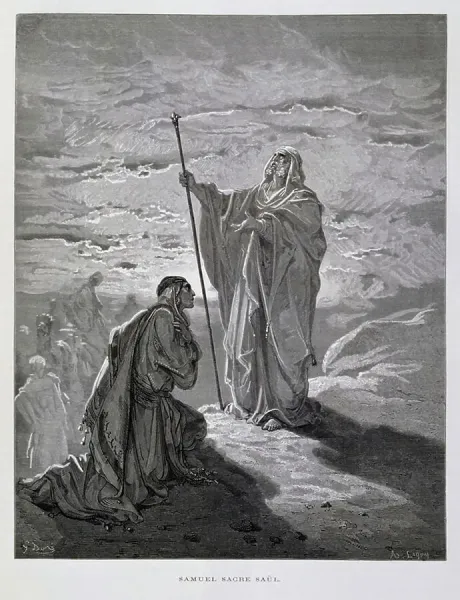
However, Saul’s reign revealed an important lesson: external qualities do not guarantee faithful leadership.
Saul’s Failure
Despite a promising start, Saul repeatedly disobeyed God. Some key failures included:
-
Offering sacrifices without waiting for Samuel
-
Disobeying God’s command regarding the Amalekites
-
Acting out of pride and fear rather than faith
Because of this disobedience, God rejected Saul as king. This moment emphasized that Israel’s kings were accountable to God’s authority.
David: God’s Model for Future Kings
After Saul’s rejection, God instructed Samuel to anoint a new king: David.
Unlike Saul, David was chosen not for his appearance but for his heart.
God’s Criteria for Leadership
When Samuel visited David’s family, God told him an important principle:
“People look at the outward appearance, but the Lord looks at the heart.”
This moment established a key theme for the monarchy.
The ideal king should:
-
Trust God
-
Obey God’s commands
-
Lead the nation spiritually
-
Demonstrate humility and faith
David became the prototype for future kings and later the ancestor of the Messianic line.
Theological Themes That Shape Israel’s Monarchy
The Book of 1 Samuel introduces several key themes that define Israel’s monarchy.
1. God Remains the True King
Even with a human ruler, God remains the ultimate authority over Israel.
Kings were expected to:
-
Follow God’s laws
-
Seek prophetic guidance
-
Lead the people toward faithfulness
2. Obedience Is More Important Than Power
Through Saul’s failure, the book teaches that leadership without obedience leads to downfall.
Samuel famously declared:
“To obey is better than sacrifice.”
This message shaped the expectations for all future kings.
3. God Chooses Leaders According to His Purpose
The contrast between Saul and David shows that God’s choice does not depend on human standards.
Instead, God looks at:
-
Character
-
Faith
-
Humility
-
Willingness to obey
Preparing the Way for the Davidic Kingdom
The events of 1 Samuel ultimately prepare the stage for the establishment of the Davidic dynasty. David’s reign would later bring:
-
Political stability
-
Military victories
-
Religious renewal
-
The foundation for the future kingdom described in Second Book of Samuel.
More importantly, David’s lineage would eventually lead to the coming of the Messiah in biblical theology.
Lessons About Leadership and Faith
The Book of 1 Samuel provides timeless lessons about leadership and faithfulness.
Key Lessons
-
Leadership must be guided by obedience to God.
-
External success does not replace spiritual integrity.
-
God often chooses unlikely individuals to fulfill His purposes.
-
True authority comes from serving God faithfully.
These lessons continue to shape biblical understanding of leadership today.
Conclusion
The First Book of Samuel plays a pivotal role in biblical history by documenting Israel’s transition from judges to kings. Through the leadership of Samuel and the contrasting reigns of Saul and David, the book establishes the spiritual foundations of Israel’s monarchy.
Rather than presenting kingship as merely political power, the narrative shows that true leadership depends on obedience to God. By introducing the principles of divine authority, faithful leadership, and God’s sovereign choice, 1 Samuel prepares the stage for the future kings of Israel and the unfolding story of God’s plan for His people.
One Comment
Comments are closed.